Interior design mistakes are rarely dramatic. They're the accumulation of small decisions that each seem reasonable but add up to a room that feels inexplicably wrong — too busy, too flat, too uncomfortable. Most of them are made for good reasons and can be corrected without starting from scratch.
1. The rug is too small
Possibly the single most common interior design error: a rug that floats in the middle of the room with none of the furniture sitting on it. A rug that is too small makes the room feel disjointed and the furniture feel unanchored.
The rule: at minimum, the front legs of all seating furniture should sit on the rug. Ideally, all four legs of the primary seating should be on it. In a living room, this means a rug that is almost certainly larger than the one you were considering. Go up a size.
2. All the lights are on the ceiling
A room lit only from above — by ceiling downlights or a single pendant — feels flat and institutional. The eye needs light from multiple heights and angles. Add table lamps, floor lamps, and wall lights that illuminate from eye level and below. Install dimmers. The difference this makes to an evening room is immediate and dramatic.
3. The sofa is pushed against the wall
In small rooms this is sometimes unavoidable, but in most rooms the instinct to push furniture against walls creates a vast empty space in the middle and conversations at shouting distance. Pulling furniture in — even by 30–40cm — creates a more intimate arrangement and actually makes the room feel larger by using the space more intentionally.
4. Everything matches
A room where every piece of furniture is from the same collection, in the same finish, in the same style, looks like a showroom rather than a home. Mixing periods, materials, and styles — within a coherent colour palette — creates the kind of layered, personal quality that makes a room feel lived-in rather than assembled.
The mix formula: Aim for roughly one-third inherited or vintage, one-third deliberate design purchases, and one-third practical functional pieces. The variation in origin and age is what gives a room character.
5. Art hung too high
Art should be hung at eye level — which in practice means the centre of the piece at approximately 145–150cm from the floor. Most people hang art too high, which disconnects it from the furniture below and makes the room feel top-heavy. When hanging art above a sofa or bed, the bottom of the frame should be 15–20cm above the furniture, not floating near the ceiling.
6. Curtains that stop at the window frame
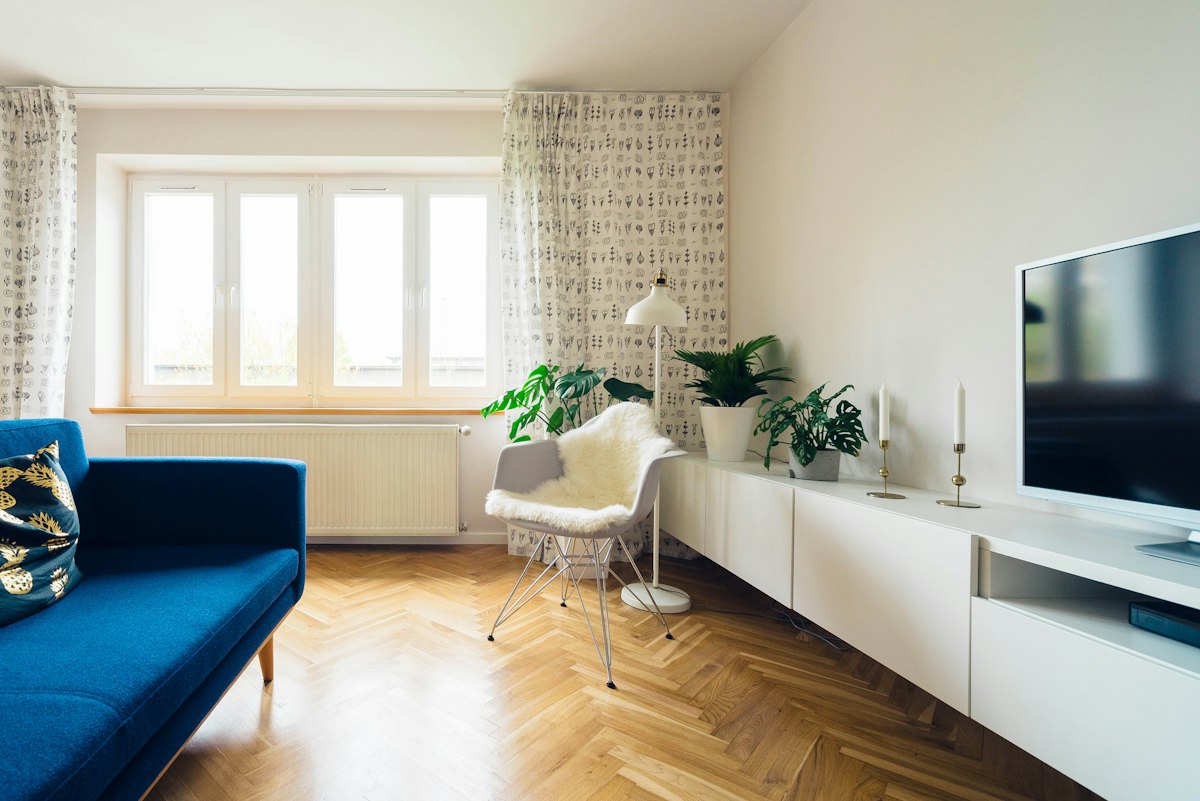
Curtains that hang from just above the window frame to just below the sill make windows look small and rooms look low. Hang curtain rods as close to the ceiling as possible and let curtains fall to the floor. This makes windows appear taller, rooms appear higher, and the whole composition more generous — even when the windows themselves are modest.
7. Buying furniture before measuring
It sounds obvious. It happens constantly. Before buying any significant piece of furniture, measure the space in all three dimensions, tape out the footprint on the floor, and verify that the piece can physically enter the room through the doorways, stairwells, and hallways that lead to it. The number of sofas stranded in stairwells is larger than you would believe.