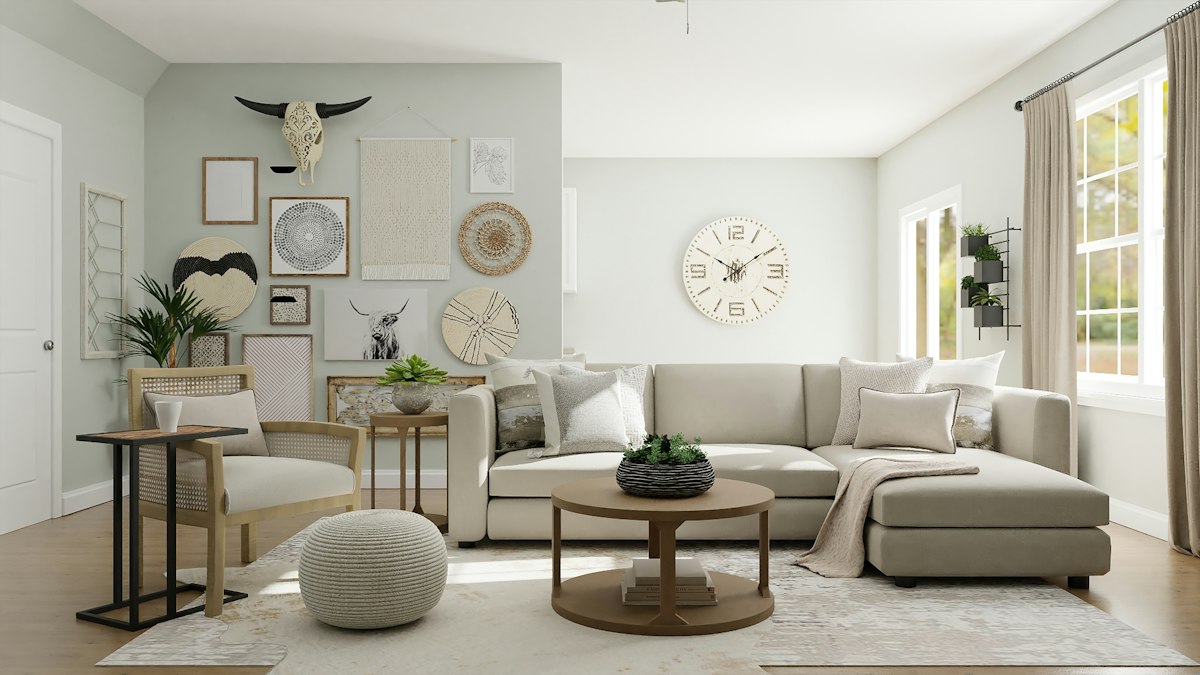
Ask most people what makes a beautiful room and they'll describe furniture, colour, or style. Ask an experienced interior designer and the answer is almost always the same: light. Not lamps, not fixtures — light itself. The way it enters, moves through, and leaves a space is the single greatest determinant of how that space feels.
This sounds abstract until you pay attention to it. The same room at 8am in winter, at noon in summer, and at 7pm with candles lit are three completely different experiences. The furniture hasn't moved. The colour hasn't changed. But the room has transformed because the light has transformed.
Natural light: the foundation
Before making any design decision about a space — before choosing a paint colour, before buying furniture — spend time observing its natural light. Which direction does it face? North-facing rooms receive cool, diffuse, consistent light throughout the day. South-facing rooms receive warm, direct light that moves dramatically across the walls. East-facing rooms are luminous in the morning and dim by afternoon. West-facing rooms are dark in the morning and warmly flooded in the evening.
The most important rule: Never choose a paint colour from a chip or a screen. Take a large sample (at least A4 size) and observe it in the actual room at different times of day. A colour that appears warm and inviting in the showroom may look grey and cold in your north-facing living room.
The direction your windows face should influence every other decision. A north-facing room needs warmer tones to compensate for cool light. A south-facing room can handle cooler colours because the direct sunlight adds warmth. Getting this wrong is one of the most common reasons a carefully considered room feels inexplicably wrong.
The three layers of artificial light
Lighting designers work with three categories of artificial light, and understanding them is the difference between a room that feels flat and one that feels alive.
Ambient (general) light
The overall illumination of a space — typically from ceiling fixtures or recessed downlights. Most rooms rely too heavily on ambient light and too little on the other two layers. A room lit only by a central ceiling fixture will feel institutional regardless of how beautiful its furniture is. Ambient light should be dimmable and warmer than you think you need (2700K–3000K colour temperature for living spaces).
Task light
Directed light for specific activities: reading, cooking, desk work. A bedside lamp, an under-cabinet kitchen light, a desk lamp. Task lighting serves a functional purpose but also adds visual interest — a pool of light in a corner creates depth and makes a space feel larger and more layered.
Accent light
Light directed at specific objects or surfaces — artworks, plants, architectural features. Accent lighting is often skipped as an unnecessary luxury, but it is what separates rooms that feel designed from rooms that feel merely furnished. A picture light above a painting, an uplighter behind a large plant, a small lamp on a bookshelf: these create focal points and break the uniformity that makes rooms feel boring.
The mistakes most people make
- Overhead lighting only. A ceiling light directly above you creates unflattering downward shadows. Layer it with table and floor lamps that light from eye level.
- Lights that are too bright. Most living spaces are over-illuminated. Install dimmers everywhere. The ability to dial light down transforms how a room feels in the evening.
- Mixed colour temperatures. Warm (yellow) and cool (blue-white) bulbs in the same room create visual dissonance. Choose one temperature and apply it consistently. Living spaces: 2700K. Kitchens and bathrooms: 3000–3500K.
- Ignoring the ceiling. An uplighter or a lamp that bounces light off the ceiling creates softness and height. Rooms where all light comes from above and nothing comes from below feel flat and low.
The evening test: Spend an evening in any room with only table and floor lamps — no overhead light at all. Notice how the space feels compared to overhead lighting. Most people find it dramatically warmer and more comfortable. This is the effect to design toward.