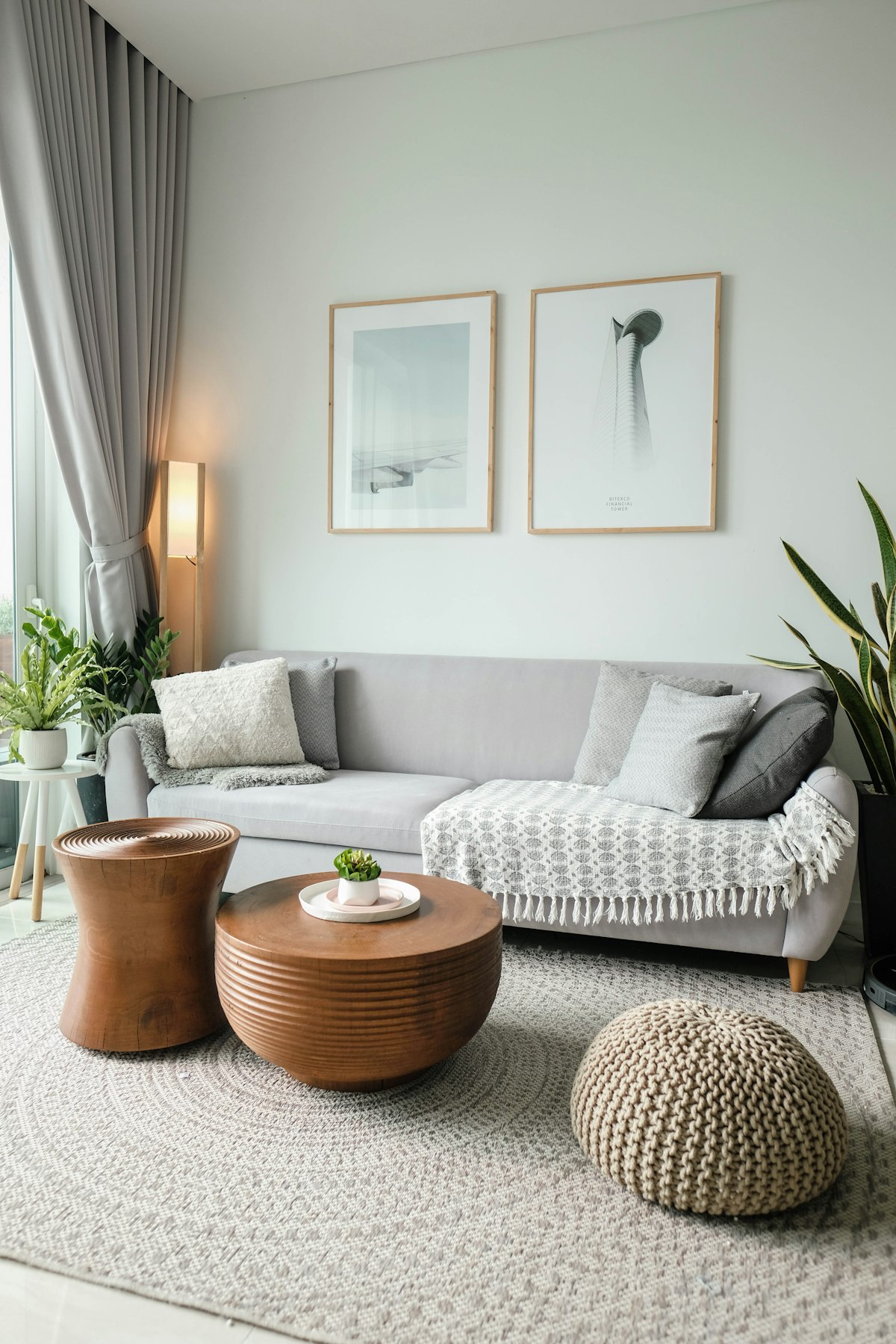
Most interior design trends have a short arc. They appear, saturate Instagram and the high street simultaneously, and then feel dated almost as quickly as they felt current. Japandi is an exception. It emerged as a named style around 2019–2020 and has shown none of the usual signs of exhaustion — partly because it is, at root, not a trend at all but a convergence of two philosophies of living that have proven their value over centuries.
What Japandi actually is
Japandi is the aesthetic intersection of Japanese and Scandinavian design traditions. The name is a portmanteau that has become a shorthand for something more substantial: a shared commitment to restraint, natural materials, honest craft, and the idea that the objects around you should be few in number, well-made, and purposeful.
What unites Japanese wabi-sabi (the acceptance and appreciation of imperfection and impermanence) and Scandinavian hygge (the pursuit of coziness and contentment in simple things) is a rejection of accumulation. Both traditions, from very different cultural starting points, arrived at the same conclusion: more things do not make a home better. Better things, fewer of them, do.
The visual characteristics
Japandi interiors tend to share several qualities. Colour palettes are muted and nature-derived — warm greys, clay tones, pale woods, soft greens, off-whites. Materials are natural wherever possible: wood, linen, cotton, ceramics, stone. Furniture is low to the ground, in the Japanese tradition, and built with visible craft, in the Scandinavian one. Decoration is minimal but not absent — a single ceramic vase, a branch, a handmade bowl given the prominence it deserves.
The principle to steal: Before placing any object in your home, ask whether it is useful, beautiful, or both. Objects that are neither are clutter — even expensive clutter. The Japandi approach is not about owning less for its own sake but about owning what genuinely belongs.
Why it works in practice
Many design styles are aspirational in a way that makes them difficult to actually live in. Japandi is the opposite. Its emphasis on comfort, warmth, and the pleasure of simple well-made things makes it more liveable than it is photogenic — which is the right order of priorities for an actual home.
The approach also ages gracefully. Because it avoids fashion-driven colours and forms, a Japandi interior from five years ago looks largely indistinguishable from one designed today. This is not because it is timeless in some vague sense — it is because its underlying principles (restraint, craft, natural materials) have proven robust across cultures and centuries.
How to move toward it without starting over
Japandi is not a look you need to buy. It is a way of editing. Remove what doesn't belong. Replace what breaks with something better-made. Introduce natural materials gradually — a linen throw, a ceramic lamp, a solid wood side table. The style arrives through subtraction more than addition, which makes it accessible at any budget and in any existing space.